China Is Different
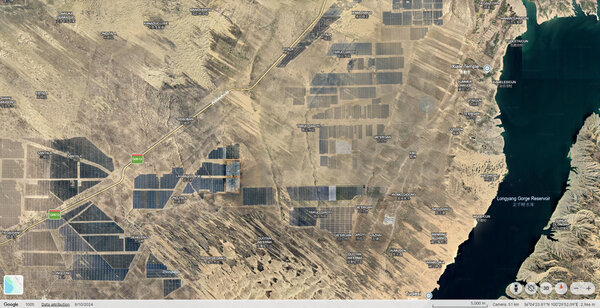
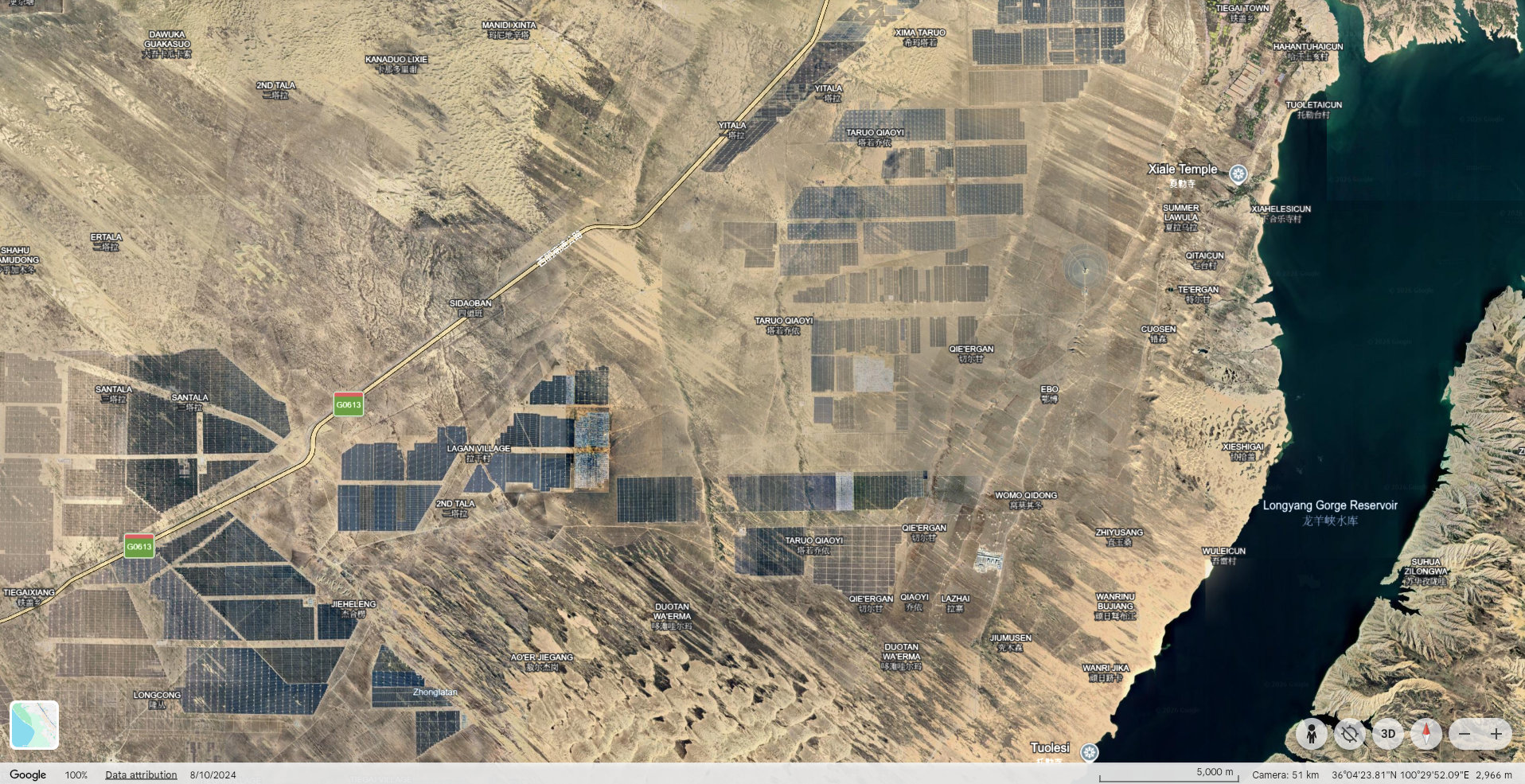
The concept of supplying Europe with electricity from North Africa is already being implemented on a large scale in China: photovoltaic fields on the western plateaus supply power to regions along the east coast.
 Why don't I actually try to bring the GEMINI next-generation house to China? Because China is different.
|
The "Speckgürtel"—Affluent Suburbs
|
In the past, the city center was the most desirable residential area. Vienna’s 1st District, the inner city. It wasn’t until around 1960 that wealthy people began moving to the suburbs surrounding Vienna. Even before that time, there were already upscale neighborhoods like Währing, Döbling, and Hitzing near the 1st District. But they were all still within Vienna’s city limits and featured large houses.
China is in the same situation as Austria was 100 years ago: the city center is the most desirable place to live. The idea of “moving to a house in the countryside” doesn’t exist in China. Noise, bad smells, exhaust fumes, and the health consequences? With the rapid shift to electric cars, these concerns are disappearing. Even the switch from noisy, smelly mopeds to electric mopeds was a blessing for quality of life.
1.4 billion people living in an area of 9.6 million km² equals 146 people per km². Germany has 233 people per km² and Austria has 110 people per km². Sounds great, right? No, because China’s population is extremely unevenly distributed.
The Hu-Huanyong Line (胡焕庸线) or Heihe-Tengchong Line (黑河-腾冲线).
It runs diagonally from southwest to northeast: from Tengchong (腾冲) in Yunnan Province in the southwest to Heihe (黑河, formerly Aihui/瑗珲) in Heilongjiang Province in the northeast. Population Distribution
- Southeast of the line: approximately 94–96% of the Chinese population on about 43% of the country's land area.
- Northwest of the line: only about 4–6% of the population lives in the significantly larger remaining area (about 57%).
The proportions have remained remarkably stable since they were first described by the geographer Hu Huanyong in 1935 (approximately 96% to 4% at that time, and still approximately 94% to 6% today).
The line roughly corresponds to the 400-mm isohyet (precipitation boundary). To the east of this line lies agriculturally productive, moister land with dense population; to the west, semi-arid to arid regions (steppes, deserts, high plateaus) dominate, allowing only sparse settlement.
In Austria or Germany, I can easily say: One-third of the population lives in owner-occupied homes in energy-optimized residential areas. 83 million residents / 3 / 2 residents per house equals 14 million houses, covering about 10,000 km². Energy crops in Germany, on the other hand, require 26,000 km². A clear, logical argument.
Let's do the same calculation for Guangdong Province in China: 128.6 million people living in an area of 179,800 km². That would amount to 21 million homes spread over 15,000 km². Not 3 percent, as in Germany, but 8 percent of the province's total area.
|
North Africa and Western China
|
For decades, Europe has been considering the “North Africa theory”: massive solar power plants in North Africa supplying Europe with energy. Different countries, different political systems, and a sea in between. It’s completely different in China: huge photovoltaic plants on the very sunny plateaus in western China, with power lines running to the east coast. One country, one political system, and everything overland.
For China, the situation is completely different: In the east, 217 million homes spread across 145,000 km³—how is that supposed to work? In the west, 145,000 km² of solar panels in desert areas—what else is there?
Talatan photovoltaic fields in China, viewed from an altitude of 51 km
On Monday morning, I switched to the US$105-per-month subscription. As of Sunday morning, I’m at 80% of my weekly allowance. Compared to X-Premium, the US$ 30 subscription offers 4 times more AI, and the US$ 105 subscription offers 15 times more AI. With the smaller subscription, this would amount to 300% and massive additional charges estimated at US$ 70.
Couldn't I have written this software back in 2024 or 2025 using Grok? No, Grok is constantly being developed. Small mini-programs were possible even back then. But keeping 400 kB of source code under control and continuing to develop it is on a whole other level.
I also asked Grok how long it would have taken a good programmer 10 years ago—that is, before AI support was available—to complete the task. Nine to 10 months, plus one to two months of training on energy.
Will programmers be needed in the future? What I’m doing right now is like being promoted from programmer to head of the software department. If you suddenly have 10 programmers to manage and projects to complete, then you need to know how to program. Otherwise, the result will look like Volkswagen’s software debacle. In stark contrast: Elon Musk was an absolute top-notch programmer.
|
Who are we? Our shareholders
|
Who are we? Our shareholders. I ask all existing shareholders—and, hopefully, many new ones soon—to submit contributions like this.
So far, only 2% of our shareholders have become shareholders themselves by referring new shareholders. That number should increase significantly in the future. The offer is 10% of the purchased shares for a direct referral and 5% for an assist. I understand the term “assist” in the same way as in soccer: whoever passes the ball to the goal scorer has made an assist. |
 Why don't I actually try to bring the GEMINI next-generation house to China? Because China is different.