Optimizing Consumption in AI Applications
You can learn to drive in a way that minimizes consumption. In the same way, you can also learn to use AI in a way that minimizes consumption. This can be just as significant as it is with driving.
 What happens if you don't check a car's remaining energy gauge every now and then? It stops when the remaining energy reaches 0. This is exactly what can happen when using artificial intelligence as well.
Most people start with a free plan. Many users never reach the limits of the free plan. For me, the first increase in the amount of AI available came with X-Premium. I’ve had X-Premium since December 2023 because you can’t run ads on X without it. I ended my ad experiment on X after just a few weeks, but it made sense again starting in February 2025: more AI capacity on Grok.
This went well until mid-January 2026. At that time, I was busy working on my paper for the CORP conference. I kept getting the message, “I’m swamped—check back later.” The deadline was approaching, so I signed up for the US$30-per-month version of Grok.
Last Sunday, Grok became unstable while programming the PEGE energy simulation. It kept displaying the same message over and over again; I forgot to make the new files available for download. At 11:40 a.m., it finally went on a temporary strike: weekly quota exhausted—either make an additional payment or continue on October 8 at 11:40 p.m.
Okay, so I sent US$20. Grok's erratic behavior continued: it kept looping with the same message, and I had to ask several times before I could download a new file. At 2:50 p.m., it crashed again—the US$ 20 was all used up. US$ 20 squandered in just 3 hours.
|
GEMINI Consulting on Cost-Effective AI Implementation
|
By "GEMINI," I mean Google's AI. After Grok had once again demanded numbers or that I wait until October 8, I asked GEMINI about the incident. What followed was sort of like a course in fuel-efficient driving.
The most important tip: Transfer your work from the old project to a new one, because the old project has become unstable. So create a new project and import the files created in the old project when prompted by the first question. Submit as many change requests for the program as possible at once: Submitting 10 change requests at once saves about 70% compared to submitting each change request separately.
|
Keep checking the fuel gauge
|
Following my discussion with GEMINI about optimizing AI usage, I transferred another US$20. This time, each request was carefully prepared and the usage was documented.
First Consumer Test:
Is it possible to create in FreeCAD Python input forms to enter parameters?
Not as a spreadsheet. As a form like at the PV sim with Python using a browser as GUI.
That brought my balance down from US$20 to US$19.88—12 cents for that question. Then someone sent me a picture with a description of storage bricks. How much might they weigh? That question cost only 5 cents. After these initial usage tests, the project was relaunched.
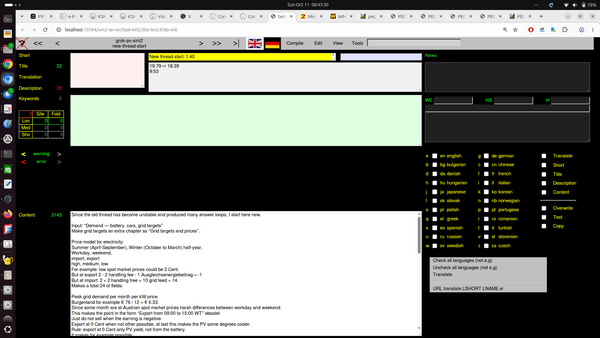 Documentation on Grok queries and usage. Here is the full text of the query
This set a new record for the longest response time: 9 minutes and 53 seconds. The previous record was 9:30 seconds for this question:
How much electricity would an artificial magnetic field at Lagrange Point 1 require to adequately protect the Earth from a solar storm 10 times stronger than the Carrington Event, extending all the way to geostationary orbit?
If this topic becomes the subject of public discussion, buy SpaceX stock immediately. This company is the only one capable of installing the equipment needed to generate an artificial magnetic field at Lagrange Point 1 in the foreseeable future.
The restart used up US$ 1.40. Then, on Thursday at 11:48 p.m., I received the next weekly allocation from my US$ 30-per-month Grok subscription. By that point, US$ 3.33 of my US$ 20 extra payment remained. As of this Sunday morning, I’ve only used up 17% of my weekly allowance. The AI included in the subscription is significantly cheaper than the cost of going over the subscription limit.
It's just like making phone calls: 1,000 minutes and 50 GB per month included for €9.90 per month. If you break that down to €5 for the minutes and €4.90 for the GB, that's only half a cent per minute. But if you go over the 1,000 minutes, it’s 4 cents per minute.
|
Coming Soon: PEGE energy Sim V0.0
|
The first version will be released soon. Here, for starters, are the results and comparisons for a GEMINI house at three different locations, each with as much electricity sold on the spot market and off-grid as possible.
When the EMS—Energy Management System—goes awry. Due to the low spot market prices between 10:00 a.m. and 4:00 p.m. daylight saving time, it’s important to start the day with the battery as empty as possible. All the energy generated between 10:00 a.m. and 4:00 p.m. during daylight saving time should be sold during the most expensive hours. So you have to set up rules for how the battery is managed. These rules are then implemented in program code, and the next simulation will show what happens as a result.
In such cases, it can happen that too much electricity has been sold, forcing the company to purchase electricity from the grid. Simply because the EMS messed up. It’s similar to what happens in politics. A bill is drafted. Then the law is passed, and a little later you see all the unintended consequences of this new law—consequences that were either overlooked or completely underestimated.
Today, the EMS design is being simulated. In just a few months, there may be a need for such a software design in a real-world application: the EWG (Energy-Heat Garage) and the GEMINI House.
Here are a few examples using the GEMINI house. In the simulation, 10 kWh is charged into an electric car EVERY day. This accounts for just over 50% of the total electricity demand.
Grünheide is much farther north; Fürstenbrunn is located north of the Untersberg. In winter, there is no direct sunlight there for several months.
If electricity imports occur during on-grid operation, it's usually because the EMS has made a mistake.
If electricity imports appear in the off-grid report, it means the house ran out of electricity needed for normal operation. That never happened in Inning. In Fürstenbrunn, it would have been enough to avoid charging at home 10 times a year on average—not 10 kWh per charge—and in Grünheide, to avoid charging at home for 7 days a year.
The simulation did not take into account the GEMINI House’s heat storage system. A record day saw the heat pump use 12.8 kWh for heating. Very cold days are usually cloudless. Unless you live in the shadow of a mountain, this means sunshine and high energy yield. If, on the other hand, you live in the shadow of the Untersberg, this means the solar panels only see the blue sky, resulting in a lower yield than on a cloudy day.
|
Who are we? Our shareholders
|
Who are we? Our shareholders. I ask all existing shareholders—and, hopefully, many new ones soon—to submit contributions like this.
So far, only 2% of our shareholders have become shareholders themselves by referring new shareholders. That number should increase significantly in the future. The offer is 10% of the purchased shares for a direct referral and 5% for an assist. I understand the term “assist” in the same way as in soccer: whoever passes the ball to the goal scorer has made an assist. |
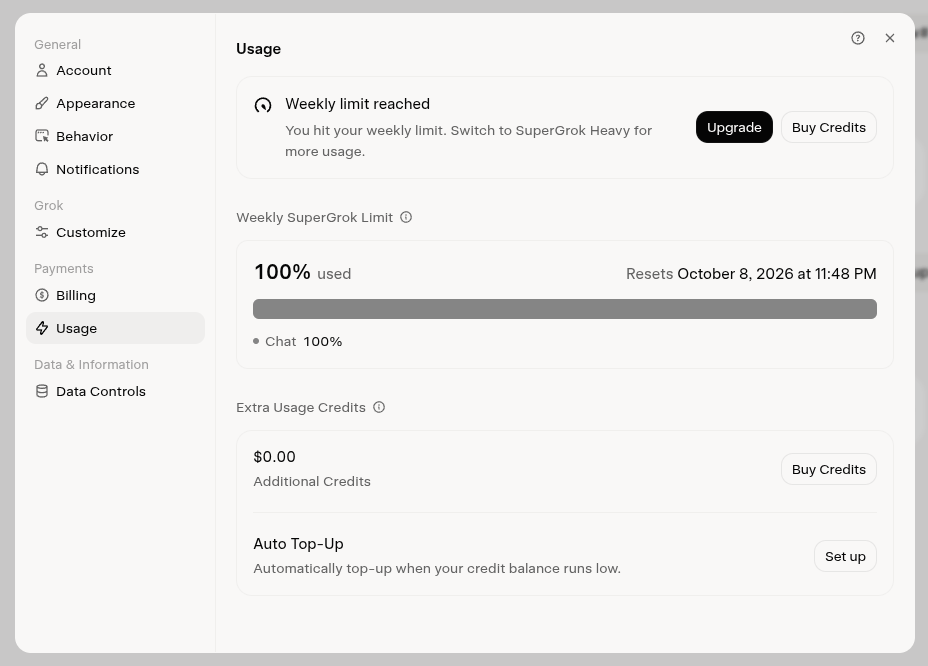 What happens if you don't check a car's remaining energy gauge every now and then? It stops when the remaining energy reaches 0. This is exactly what can happen when using artificial intelligence as well.
Most people start with a free plan. Many users never reach the limits of the free plan. For me, the first increase in the amount of AI available came with X-Premium. I’ve had X-Premium since December 2023 because you can’t run ads on X without it. I ended my ad experiment on X after just a few weeks, but it made sense again starting in February 2025: more AI capacity on Grok.
This went well until mid-January 2026. At that time, I was busy working on my paper for the CORP conference. I kept getting the message, “I’m swamped—check back later.” The deadline was approaching, so I signed up for the US$30-per-month version of Grok.
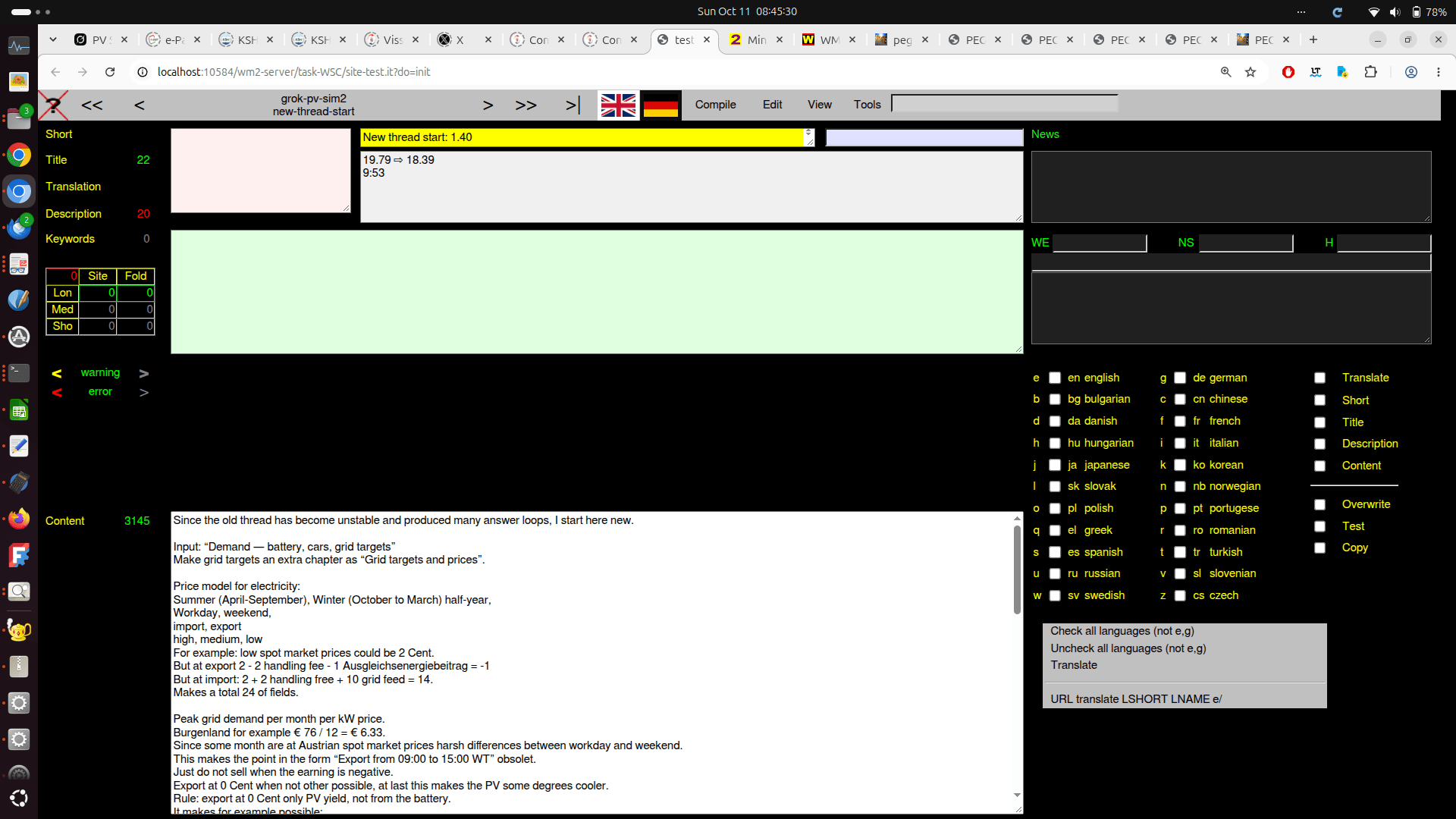 Documentation on Grok queries and usage. Here is the full text of the query
This set a new record for the longest response time: 9 minutes and 53 seconds. The previous record was 9:30 seconds for this question:
How much electricity would an artificial magnetic field at Lagrange Point 1 require to adequately protect the Earth from a solar storm 10 times stronger than the Carrington Event, extending all the way to geostationary orbit?
If this topic becomes the subject of public discussion, buy SpaceX stock immediately. This company is the only one capable of installing the equipment needed to generate an artificial magnetic field at Lagrange Point 1 in the foreseeable future.
The restart used up US$ 1.40. Then, on Thursday at 11:48 p.m., I received the next weekly allocation from my US$ 30-per-month Grok subscription. By that point, US$ 3.33 of my US$ 20 extra payment remained. As of this Sunday morning, I’ve only used up 17% of my weekly allowance. The AI included in the subscription is significantly cheaper than the cost of going over the subscription limit.
It's just like making phone calls: 1,000 minutes and 50 GB per month included for €9.90 per month. If you break that down to €5 for the minutes and €4.90 for the GB, that's only half a cent per minute. But if you go over the 1,000 minutes, it’s 4 cents per minute.