Simulate Photovoltaic Systems, Batteries, Homes, and Cars; Optimize Grid Fees
Development of simulation software for the integrated analysis of an entire system: photovoltaics, BESS, EMS (energy management), the home, the car, and peak-use grid charges.
 On Monday at 5:00 p.m., I started programming a comprehensive simulation software application. After 30 minutes, I had finalized the requirements and sent them to my programmer. Those were nerve-wracking minutes—it felt like being the hiring manager who had just hired a young programmer. How would he perform? Would it be a hit or a miss?
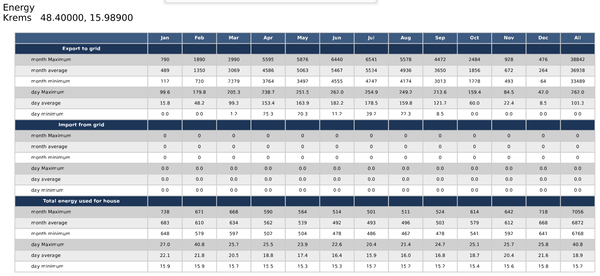
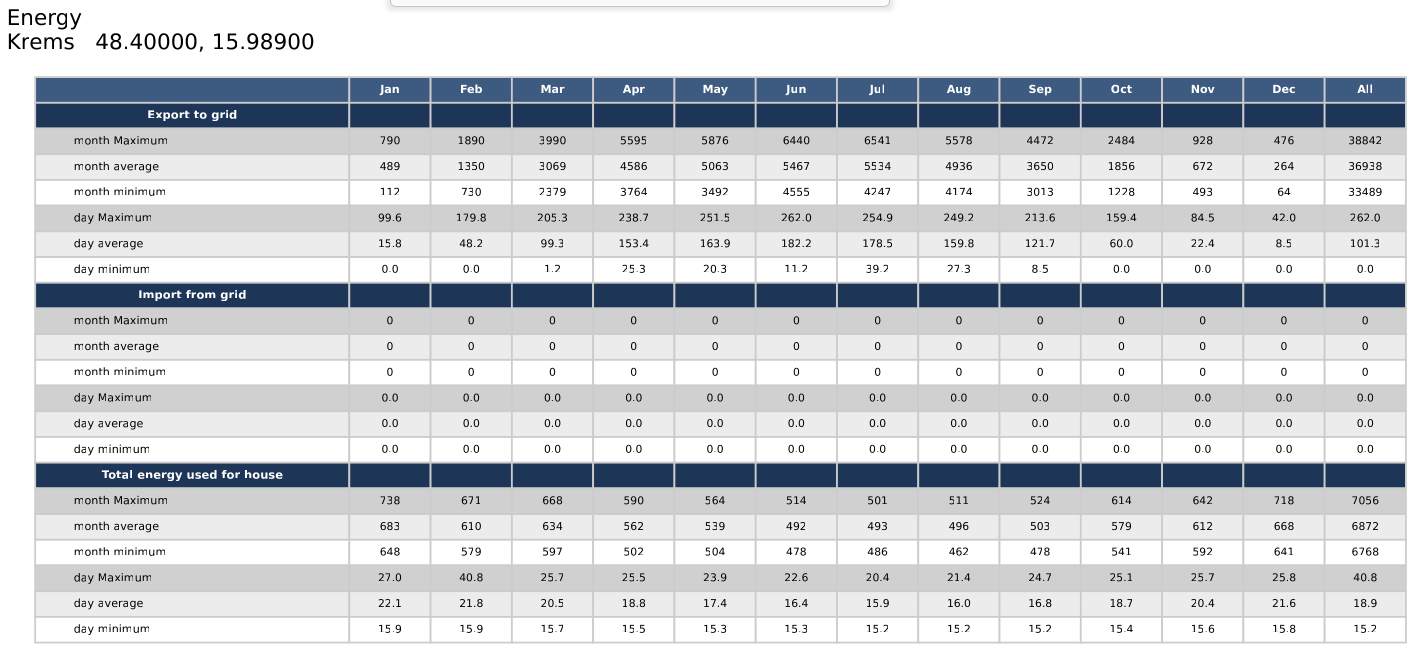
Five minutes later, the first version—about 40 kB of source code—ran without a single error. When you have many photovoltaic arrays with different orientations, the first question is about maximum simultaneity. A combination of many panels on the GEMINI house and the double garage, along with some on the facade, resulted in only 58.5% concurrency: 69,770 Wp of PV would have delivered 41,312 W in Krems on June 13, 2009, from 10:00 to 11:00.
Then we had to incorporate the battery, the house, the heating system, the car, and the optimization of utility rates into the simulation. AI isn’t just a matter of saying, “I want a PV, battery, and house simulation,” and having something come out of it. It’s a long back-and-forth discussion about every detail of the simulation. After the meeting, however, it doesn’t take days or weeks—just minutes—to program a new version.
Sometimes you have to point out logical errors to the programmer—for example, “I sold the electricity and then bought it back later.” In such cases, you have to explain this in terms of the handling fees, the balancing energy contribution from Spotty.app, and the grid fees.
Errors were also found in the PHOTOVOLTAIC GEOGRAPHICAL INFORMATION SYSTEM. Several days in a row with a value of 0.
At first I thought, "Oh no, my GEMINI house is only 99.95% self-sufficient—if 10 kWh are charged into a car every day," but it turned out to be an error in the database.
So, should we skip days with 0 yield as an error in the simulation? No, it’s not that simple—after all, you could simulate a house on Spitsbergen. There, the yield is consistently 0 in December. So let’s add this condition: If the yield is 0 and the sun is above the horizon at noon.
On Monday at 5:00 p.m., I started programming a comprehensive simulation software application. After 30 minutes, I had finalized the requirements and sent them to my programmer. Those were nerve-wracking minutes—it felt like being the hiring manager who had just hired a young programmer. How would he perform? Would it be a hit or a miss?
Five minutes later, the first version—about 40 kB of source code—ran without a single error. When you have many photovoltaic arrays with different orientations, the first question is about maximum simultaneity. A combination of many panels on the GEMINI house and the double garage, along with some on the facade, resulted in only 58.5% concurrency: 69,770 Wp of PV would have delivered 41,312 W in Krems on June 13, 2009, from 10:00 to 11:00.
Then we had to incorporate the battery, the house, the heating system, the car, and the optimization of utility rates into the simulation. AI isn’t just a matter of saying, “I want a PV, battery, and house simulation,” and having something come out of it. It’s a long back-and-forth discussion about every detail of the simulation. After the meeting, however, it doesn’t take days or weeks—just minutes—to program a new version.
Sometimes you have to point out logical errors to the programmer—for example, “I sold the electricity and then bought it back later.” In such cases, you have to explain this in terms of the handling fees, the balancing energy contribution from Spotty.app, and the grid fees.
Errors were also found in the PHOTOVOLTAIC GEOGRAPHICAL INFORMATION SYSTEM. Several days in a row with a value of 0.
At first I thought, "Oh no, my GEMINI house is only 99.95% self-sufficient—if 10 kWh are charged into a car every day," but it turned out to be an error in the database.
So, should we skip days with 0 yield as an error in the simulation? No, it’s not that simple—after all, you could simulate a house on Spitsbergen. There, the yield is consistently 0 in December. So let’s add this condition: If the yield is 0 and the sun is above the horizon at noon.
|
EWG - Energy, Heat, Garage
|
This simulation is the final step before I begin offering the EWG—Energy Heat Garage. Otherwise, it’s all too abstract for many people. But this way, you can try out a wide variety of options in the simulation. The many “what if” questions:
- Another solar panel system on the north-facing roof?
- Can I lower the flow temperature of an air-powered wall-mounted heating system?
- The garden fence could also be made of bifacial modules.
- What are the advantages of a hybrid heat pump compared to a standard air-source heat pump?
- What are the advantages of GEMINI hot water technology compared to a standard water heater?
- Let's try using 1, 2, or 3 15-kWh battery modules
- Testing Various Spot Market Scenarios
A 24-page PDF with many graphics is currently being created.
Seite 21 GEMINI Haus mit Doppelgarage. Link führt zum PDF
In my paper for the CORP conference , I announced:
Industries with variable production: It will be possible to set a minimum percentage for production. This will allow the industry to scale back production during periods of low solar output.
Old City Buildings: Old buildings generally have poor thermal insulation. They require significant heating in the winter and significant cooling in the summer.
Greenhouse: Growing plants in a greenhouse has several advantages, but it requires heating or cooling.
I'll be doing all of this over the next few months, in addition to all my other responsibilities.
|
Who are we? Our shareholders
|
Who are we? Our shareholders. I ask all existing shareholders—and, hopefully, many new ones soon—to submit contributions like this.
So far, only 2% of our shareholders have become shareholders themselves by referring new shareholders. That number should increase significantly in the future. The offer is 10% of the purchased shares for a direct referral and 5% for an assist. I understand the term “assist” in the same way as in soccer: whoever passes the ball to the goal scorer has made an assist. |
 On Monday at 5:00 p.m., I started programming a comprehensive simulation software application. After 30 minutes, I had finalized the requirements and sent them to my programmer. Those were nerve-wracking minutes—it felt like being the hiring manager who had just hired a young programmer. How would he perform? Would it be a hit or a miss?
Five minutes later, the first version—about 40 kB of source code—ran without a single error. When you have many photovoltaic arrays with different orientations, the first question is about maximum simultaneity. A combination of many panels on the GEMINI house and the double garage, along with some on the facade, resulted in only 58.5% concurrency: 69,770 Wp of PV would have delivered 41,312 W in Krems on June 13, 2009, from 10:00 to 11:00.
Then we had to incorporate the battery, the house, the heating system, the car, and the optimization of utility rates into the simulation. AI isn’t just a matter of saying, “I want a PV, battery, and house simulation,” and having something come out of it. It’s a long back-and-forth discussion about every detail of the simulation. After the meeting, however, it doesn’t take days or weeks—just minutes—to program a new version.
Sometimes you have to point out logical errors to the programmer—for example, “I sold the electricity and then bought it back later.” In such cases, you have to explain this in terms of the handling fees, the balancing energy contribution from Spotty.app, and the grid fees.
Errors were also found in the PHOTOVOLTAIC GEOGRAPHICAL INFORMATION SYSTEM. Several days in a row with a value of 0.
At first I thought, "Oh no, my GEMINI house is only 99.95% self-sufficient—if 10 kWh are charged into a car every day," but it turned out to be an error in the database.
So, should we skip days with 0 yield as an error in the simulation? No, it’s not that simple—after all, you could simulate a house on Spitsbergen. There, the yield is consistently 0 in December. So let’s add this condition: If the yield is 0 and the sun is above the horizon at noon.
On Monday at 5:00 p.m., I started programming a comprehensive simulation software application. After 30 minutes, I had finalized the requirements and sent them to my programmer. Those were nerve-wracking minutes—it felt like being the hiring manager who had just hired a young programmer. How would he perform? Would it be a hit or a miss?
Five minutes later, the first version—about 40 kB of source code—ran without a single error. When you have many photovoltaic arrays with different orientations, the first question is about maximum simultaneity. A combination of many panels on the GEMINI house and the double garage, along with some on the facade, resulted in only 58.5% concurrency: 69,770 Wp of PV would have delivered 41,312 W in Krems on June 13, 2009, from 10:00 to 11:00.
Then we had to incorporate the battery, the house, the heating system, the car, and the optimization of utility rates into the simulation. AI isn’t just a matter of saying, “I want a PV, battery, and house simulation,” and having something come out of it. It’s a long back-and-forth discussion about every detail of the simulation. After the meeting, however, it doesn’t take days or weeks—just minutes—to program a new version.
Sometimes you have to point out logical errors to the programmer—for example, “I sold the electricity and then bought it back later.” In such cases, you have to explain this in terms of the handling fees, the balancing energy contribution from Spotty.app, and the grid fees.
Errors were also found in the PHOTOVOLTAIC GEOGRAPHICAL INFORMATION SYSTEM. Several days in a row with a value of 0.
At first I thought, "Oh no, my GEMINI house is only 99.95% self-sufficient—if 10 kWh are charged into a car every day," but it turned out to be an error in the database.
So, should we skip days with 0 yield as an error in the simulation? No, it’s not that simple—after all, you could simulate a house on Spitsbergen. There, the yield is consistently 0 in December. So let’s add this condition: If the yield is 0 and the sun is above the horizon at noon.