Energy Transition Without Subsidies
Subsidies for grid-puker systems (which feed all generated power into the grid immediately, no matter the cost to taxpayers via the EEG surcharge) jeopardize the energy transition.
 The government has a duty to plan for longer periods of time than ordinary citizens typically do. The government has a duty to identify future threats early on and to enable citizens to protect themselves from these threats.
This has led to the initial promotion of photovoltaics through feed-in tariffs that are more than 10 times higher than the market price for electricity. However, this must be strictly regulated.
I first reported on such an adjustment in 2007: The annual reduction in the EEG feed-in tariff was set to increase from 5% to 7% and later to 8%.
In 2008, this was increased to as much as 9%.
There is a big difference between strict control and destruction.
The government has a duty to plan for longer periods of time than ordinary citizens typically do. The government has a duty to identify future threats early on and to enable citizens to protect themselves from these threats.
This has led to the initial promotion of photovoltaics through feed-in tariffs that are more than 10 times higher than the market price for electricity. However, this must be strictly regulated.
I first reported on such an adjustment in 2007: The annual reduction in the EEG feed-in tariff was set to increase from 5% to 7% and later to 8%.
In 2008, this was increased to as much as 9%.
There is a big difference between strict control and destruction.
- A one-time rate cap of approximately 20–30% (depending on the plant class), in addition to the degression that is already due:
- Roof ≤ 10 kW: 24.43 → 19.50 ct/kWh
- Larger rooftop systems: 21.98 → 16.50 ct/kWh
- Open-space rate: 17.94 → 13.50 ct/kWh
- Systems > 10 MW: No longer eligible for EEG payments.
- Monthly rather than semi-annual degression (“flexible cap”): Base rate of 1% per month (~11.4% per year). If the corridor is exceeded, the rate can be increased to 2.8% per month. The statutory expansion corridor was 2.5–3.5 GW per year.
- A strict overall cap of 52 GW of installed PV capacity: after that, zero feed-in tariff (feed-in priority remained).
- Market Integration Model (effective as of 2014 for systems installed on or after April 1, 2012): For rooftop systems ranging from 10 kW to 1 MW, only 90% of annual generation is now eligible for EEG feed-in tariffs; the remainder is for self-consumption or the market. The self-consumption surcharge was eliminated.
The German solar lobby, with its 70 GW expansion target at the time. Anyone with a lobby like that doesn't need enemies anymore.
That is why I consider the 70 GW expansion target to be the first major act of sabotage against the energy transition.
|
In the Comfort Zone of Subsidies
|
This was then reversed under the "traffic light" coalition. But that's when the second major act of sabotage against the energy transition took effect: We won't need electricity storage for a very long time yet.
This new EEG does not reward grid feed-in based on demand anywhere. It rewards those who flood the grid with power when prices are low or even negative. Taxpayers foot the bill for the difference through the EEG surcharge. In extreme cases, this can even exceed 50 cents/kWh.
Enerparc’s bankruptcy can be attributed to this completely misguided EEG subsidy policy: 5.5 GW of photovoltaic capacity, but only 3.8 GW connected to the grid. Only 0.3 GWh of battery storage. With a different EEG design, Enerparc might have had 5 GW of PV and 15 GWh of battery storage, requiring only 1.7 GW of grid connection capacity.
|
At current prices, subsidies are unnecessary
|
Become a Spotty.app customer
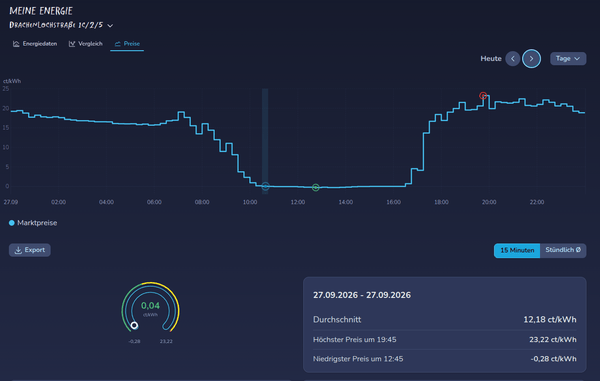
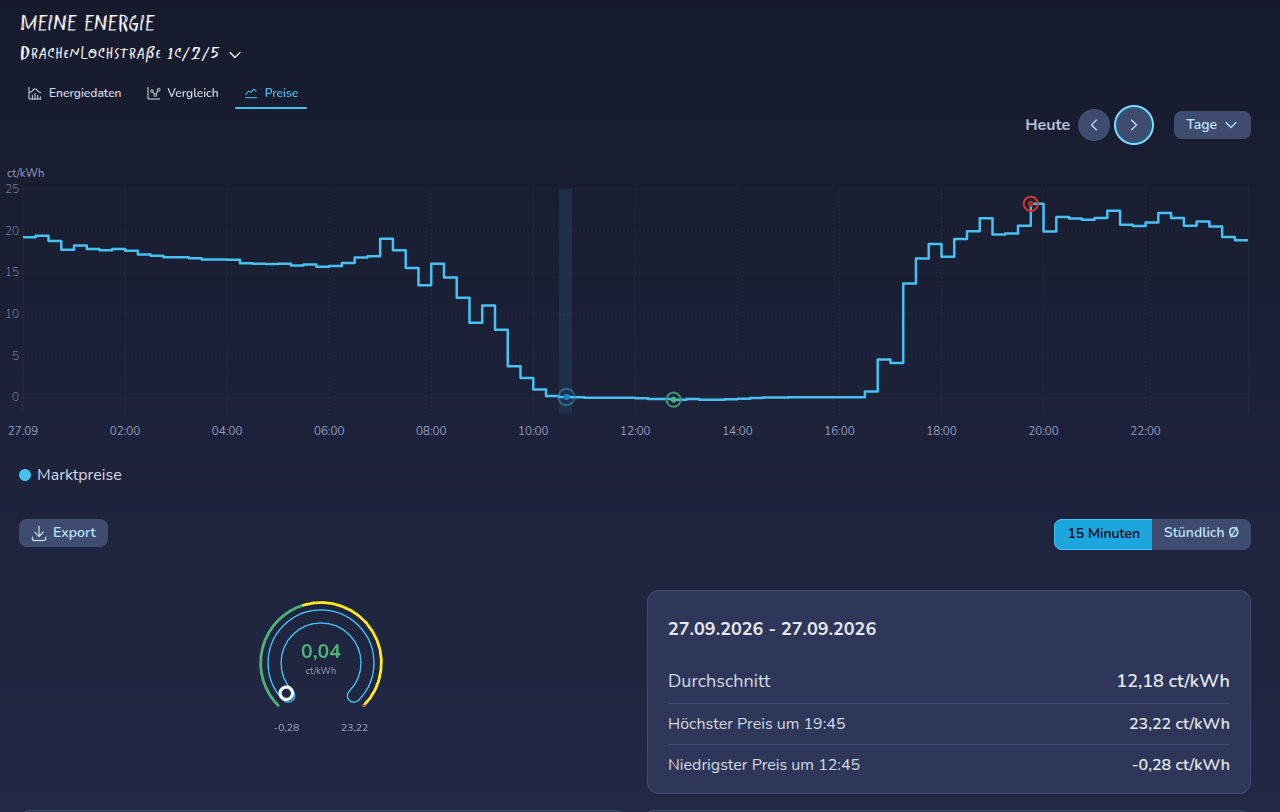
Today, Sunday, the “Netzkotzer” are keeping prices in Austria’s spot market zone between 10:00 a.m. and 4:45 p.m. at levels below 1 cent/kWh or even slightly negative. To help combat the oversupply of electricity, my Tesla Y is currently charging. However, there are also many hours today with prices above 18 cents/kWh. On weekdays, there are also many hours with prices above 25 cents/kWh.
Eliminating the EEG subsidy in Germany would therefore be a measure that would stabilize the industry. The only problem: bankability. Bankability refers to a business model that is secure enough for a bank to grant a loan. The trend in spot market prices, which I have been monitoring since 2009, is convincing to me: income from electricity sales can be a key pillar of GEMINI home financing.
To me, this data is completely convincing. But the banker asks, what happens if spot market prices fall to 2016 levels? Perhaps a minimum rate of 2 cents/kWh from 10:00 a.m. to 4:00 p.m. in the summer and 10 cents/kWh from 4:00 p.m. until 10:00 a.m. the next day? This isn’t a fully developed proposal, but rather just an indication of the direction we should take. A very low level, but sufficient to ensure bankability. Selling 40,000 kWh at 10 cents would still amount to €4,000 per year and cover a monthly loan payment of €333. This would make it possible to finance over €50,000 over 20 years.
So it's not a safety net, but rather a safeguard for the very unlikely event that spot market prices drop dramatically.
|
Who are we? Our shareholders
|
Who are we? Our shareholders. I ask all existing shareholders—and, hopefully, soon many new ones—to submit contributions like this.
So far, only 2% of our shareholders have become shareholders themselves by referring new shareholders. That number should increase significantly in the future. The offer is 10% of the purchased shares for a direct referral and 5% for an assist. I understand the term “assist” in the same way as in soccer: whoever passes the ball to the goal scorer has made an assist. |
 The government has a duty to plan for longer periods of time than ordinary citizens typically do. The government has a duty to identify future threats early on and to enable citizens to protect themselves from these threats.
This has led to the initial promotion of photovoltaics through feed-in tariffs that are more than 10 times higher than the market price for electricity. However, this must be strictly regulated.
I first reported on such an adjustment in 2007: The annual reduction in the EEG feed-in tariff was set to increase from 5% to 7% and later to 8%.
In 2008, this was increased to as much as 9%.
The government has a duty to plan for longer periods of time than ordinary citizens typically do. The government has a duty to identify future threats early on and to enable citizens to protect themselves from these threats.
This has led to the initial promotion of photovoltaics through feed-in tariffs that are more than 10 times higher than the market price for electricity. However, this must be strictly regulated.
I first reported on such an adjustment in 2007: The annual reduction in the EEG feed-in tariff was set to increase from 5% to 7% and later to 8%.
In 2008, this was increased to as much as 9%.