Back to the Stone Age with Exorbitant Prices
A study: Getting back to electric heating—heat pumps and radiant floor heating are too expensive; you can only go that route if the better technology comes at exorbitant prices.
There is a study Infrared Heating vs. Air-Source Heat Pump and Radiant Floor Heating. For a new 150 m² home, the estimated cost for an air-source heat pump and underfloor heating is €47,500, while infrared heating costs only €12,000.
Each cost estimate also includes a second option: an additional 10 kW photovoltaic system and a 10 kWh battery for €15,000.
The study’s key finding: heat pumps and radiant floor heating are far too expensive. That’s certainly true given German prices. On top of that, production generates 7.44 metric tons of CO2, compared to 0.74 metric tons for infrared heating. However, with a rapid transition to renewable energy, this becomes completely irrelevant. When something is produced using renewable energy, CO2 emissions from production disappear.
Of course, the study acknowledges that infrared heating uses more electricity: 3,730 kWh/a instead of 1,290 kWh/a. How should this additional consumption be evaluated? Most of the electricity used for heating is consumed in the winter. We can assume 400 g of CO2 per kWh based on the German electricity mix. Heating use is particularly high in December and January, when solar power generation is very low.
The study cited an electricity price of 28 cents/kWh. Wow, my electricity price in Austria was 23.81 cents/kWh in 2025. That was extremely optimized using spot market prices. In April, May, and June, I even managed to achieve a negative energy price.
However, my electricity rate was higher during the winter months. In December 2025, it was 30.44 cents/kWh. You can charge your car when the electricity rate is low. Turn off the infrared heater between 5:00 p.m. and 11:00 p.m.? Probably not. So there’s no chance of getting 28 cents/kWh in the winter.
|
Back to the Stone Age with Exorbitant Prices
|
The study’s key message: We can’t afford modern technology—it’s all far too expensive! Back to simple electric heating. Where is the question being asked: Can we, as a society, afford electric heating? 30 million residential units with an additional 2,000 kWh of consumption, which occurs especially during the coldest winter months. That’s 60 TWh more electricity demand—in winter, of all times.
There’s the 24×365 electricity conversion efficiency. Surplus electricity in the summer is converted into methanol or methane, which serves as an energy source for electricity generation in the winter. In the simulation for Salzburg, the 24×365 efficiency is only 50.7%, assuming a constant electricity demand throughout the year. With electric heating in the winter, this figure would be even lower.
|
Floor Heating vs. GEMINI Wall Heating
|
The study also shows just how complex underfloor heating is. My wall-mounted heating system, on the other hand, is extremely simple. Complex hydraulic balancing vs. all wall-mounted heating systems receiving an even supply of heating water, with control achieved through the fan speed.
And what about the fans' power consumption? It's less than what an underfloor heating system needs to pump water through 1.5 km of pipes (150 m² and 10 m of pipe per m²) using a pump.
And who controls the fan speed after checking all the thermometers? The home computer. Here's the top choice for a home computer.
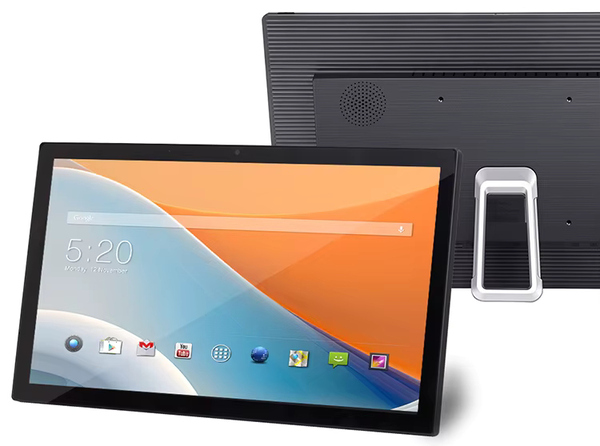 It can be mounted on the wall. It has a built-in battery, which is rare for wall-mounted tablets. This means it can be moved to another location at any time, for example, to watch videos. It runs on a Rockchip RK3588.
Right at the start of the GEMINI project, I anticipated rapid international expansion. That’s why we chose Rockchip: it was the least vulnerable to export restrictions imposed by U.S. sanctions.
Debian Linux is preinstalled as the operating system. Programming is done in Python. The graphical user interface appears either on the tablet or on another authorized computer via the Internet.
It can be mounted on the wall. It has a built-in battery, which is rare for wall-mounted tablets. This means it can be moved to another location at any time, for example, to watch videos. It runs on a Rockchip RK3588.
Right at the start of the GEMINI project, I anticipated rapid international expansion. That’s why we chose Rockchip: it was the least vulnerable to export restrictions imposed by U.S. sanctions.
Debian Linux is preinstalled as the operating system. Programming is done in Python. The graphical user interface appears either on the tablet or on another authorized computer via the Internet.
|
Looking for Home Renovation Projects
|
So far, two of my readers have reached out about home renovation projects. One project is on the Elbe River in northern Germany, and the other is in Burgenland. The project on the Elbe involves a group of houses with a heating load of 24 kW.
While looking for a heat pump, I received an offer: two 18-kW air-source heat pumps delivered right to my front door, VAT included, for the absolutely sensational price of US$5,900. With German manufacturers, you’d probably have to add a zero to that price.
This brings us back to the central theme of this newsletter: If 150 m² of underfloor heating and an air-source heat pump cost only €25,000 instead of €47,500, a study claiming that “electric heating is cheaper” would be completely impossible.
It would be even more extreme if the air-source heat pump and the wall-mounted heating system cost only €15,000.
I'd love to see even more renovation projects.
|
The Total Network Operator Madness in Germany
|
What does a grid operator do when too much electricity is fed into the grid? Shut down the systems. That’s necessary, it’s reasonable, and there’s nothing wrong with it. What does a German grid operator do when too much electricity is fed into the grid? For systems exceeding 100 kW, the photovoltaic system and the battery are shut down. No electricity can be stored, no self-consumption is possible, and the system operator must then draw electricity from the grid.
It took a long discussion to convince me that such an absurd rule actually exists. If the other person hadn't been a development engineer at SMA Inverters, I still wouldn't have believed it.
|
Who are we? Our shareholders
|
Who are we? Our shareholders.” I ask all existing shareholders—and, hopefully, many new ones soon—to submit contributions like this.
So far, only 2% of our shareholders have become shareholders themselves by referring new shareholders. That figure should increase significantly in the future. The offer is 10% of the purchased shares for a direct referral and 5% for an assist. I understand the term “assist” in the same way as in soccer: whoever passes the ball to the goal scorer has made an assist. |
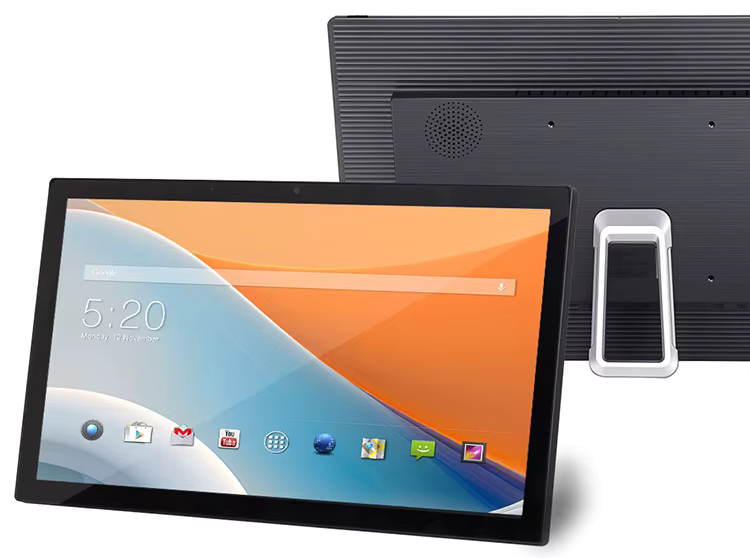 It can be mounted on the wall. It has a built-in battery, which is rare for wall-mounted tablets. This means it can be moved to another location at any time, for example, to watch videos. It runs on a Rockchip RK3588.
Right at the start of the GEMINI project, I anticipated rapid international expansion. That’s why we chose Rockchip: it was the least vulnerable to export restrictions imposed by U.S. sanctions.
Debian Linux is preinstalled as the operating system. Programming is done in Python. The graphical user interface appears either on the tablet or on another authorized computer via the Internet.
It can be mounted on the wall. It has a built-in battery, which is rare for wall-mounted tablets. This means it can be moved to another location at any time, for example, to watch videos. It runs on a Rockchip RK3588.
Right at the start of the GEMINI project, I anticipated rapid international expansion. That’s why we chose Rockchip: it was the least vulnerable to export restrictions imposed by U.S. sanctions.
Debian Linux is preinstalled as the operating system. Programming is done in Python. The graphical user interface appears either on the tablet or on another authorized computer via the Internet.